


Androgenetic Alopecia: Causes, Signs & Treatment in SG
Wellaholic Research: Androgenetic Alopecia
Direct Answer
Androgenetic alopecia is a genetically driven form of progressive hair thinning caused by sensitivity to dihydrotestosterone (DHT), a derivative of testosterone. It leads to gradual follicle miniaturisation, reduced hair density, and — without early intervention — eventual follicle dormancy. Wellaholic’s expert team emphasises that early action offers a better chance of slowing visible progression.
Introduction
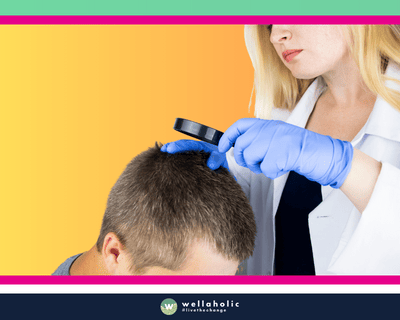
The photo arrived in a WhatsApp group chat after a colleague’s farewell lunch. Everyone looked relaxed and happy, but one detail pulled your attention away from the moment: the top of your scalp looked thinner than you expected, with the crown showing more clearly under the overhead lights. It was the first time you saw your hair from someone else’s angle, and it felt harder to dismiss.
That kind of photo trigger is often what pushes people to take hair loss seriously. Androgenetic alopecia, also known as pattern hair loss, usually develops gradually and quietly before it becomes obvious in everyday life.
In the sections ahead, Wellaholic’s expert team explains what this condition is, how it works inside the follicle, and what treatment paths Singapore customers commonly explore.
How Pattern Hair Loss Usually Begins
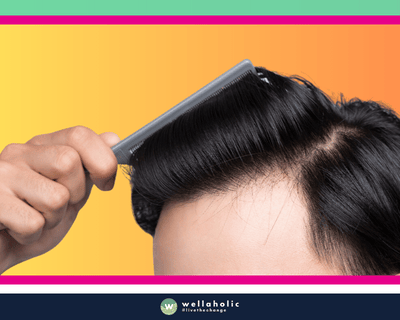
Androgenetic alopecia does not appear overnight. In men, it often starts with recession at the temples or thinning at the crown, while women more commonly notice a widening parting and lower overall density across the top of the scalp. These visible patterns reflect a deeper biological process that becomes more pronounced over time.
Doctors and scalp specialists often describe these changes using the Hamilton-Norwood scale for men and the Ludwig scale for women. These frameworks help explain why some people notice a receding hairline first, while others mainly see diffuse thinning. In both cases, the condition tends to progress gradually if nothing interrupts the underlying follicle changes
Why DHT Causes Follicles to Shrink
The main driver behind androgenetic alopecia is sensitivity to dihydrotestosterone, or DHT, which is formed when testosterone is converted by the enzyme 5-alpha reductase. In genetically susceptible follicles, DHT binds to androgen receptors and shortens the active growth phase of the hair cycle. Over repeated cycles, the follicle becomes smaller and produces finer, shorter hairs.
This process is called follicle miniaturisation. At first, the change may only look like reduced volume or more visible scalp under bright light. As miniaturisation continues, thicker terminal hairs are gradually replaced by softer, weaker vellus-like hairs, and some follicles may eventually become inactive.
Where Singapore Customers Commonly Seek Support
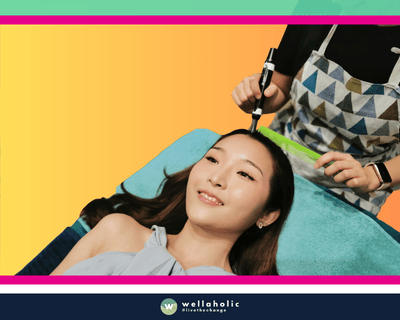
In Singapore, many customers first act when hair thinning starts affecting confidence at work, in photos, or during social occasions. Wellaholic’s expert team often sees customers who want a non-surgical aesthetic treatment path that fits into an urban routine without excessive downtime. This makes convenience and consistency important parts of the decision.
For customers working in the city, Wellaholic’s Tanjong Pagar outlet is a practical option because it is located in the CBD and is lunch-hour friendly. Others may prefer a different part of the island depending on routine and travel patterns, but the key point is that early evaluation usually creates more treatment options than waiting until thinning becomes advanced.
Singapore’s fast-paced lifestyle, humidity, and stress load may not cause androgenetic alopecia on their own, but they can make hair concerns feel more urgent and more visible.

How HairGrow 3X Supports Early Hair Loss Care
For readers dealing with androgenetic alopecia, the most relevant Wellaholic option is HairGrow 3X. This programme combines Low Level Laser Therapy (LLLT), Scalp RF Microneedling, and High-Frequency treatment in a structured approach designed to support scalp condition, stimulate the follicular environment, and address thinning in a cumulative way.
Wellaholic’s expert team presents HairGrow 3X as an aesthetic treatment for customers who want a consistent, non-surgical programme. Rather than promising a fixed timeline, the focus is on regular sessions, assessment of scalp response, and matching treatment frequency to the stage of visible thinning.
HairGrow 3X Pricing at Wellaholic (2026)
All prices below include 9% GST.
| Plan | Standard Rate |
| 1-Month Unlimited | $469 |
| 3-Month Unlimited | $446 per month |
| 6-Month Unlimited | $422 per month |
| 12-Month Unlimited | $375 per month |
For customers who prefer per-session Scalp Microneedling without a subscription, single sessions start at $179.
☀️ Afternoon Advantage: 20% off 6-month and 12-month unlimited plans, Mon–Fri 11am–5pm, excluding public holidays.
A consultation with Wellaholic’s expert team can help determine whether HairGrow 3X is suitable for the current stage of thinning and how often sessions should be scheduled.

Customer Testimonial: Scalp Microneedling & LLLT Treatment
Linus visited Wellaholic to address hair loss and scalp concerns, exploring both Low-Level Laser Therapy (LLLT) and Scalp RF Microneedling as part of a structured restoration protocol. What stood out immediately was the absence of hard-sell pressure — the team took time to understand his specific scalp condition, explained both treatment options clearly, and helped him arrive at a protocol aligned with his goals. Across multiple sessions, he found the approach consistently calm, considered, and transparent. For Linus, the experience was defined as much by the trust built over time as by the treatments themselves — and he recommends Wellaholic without reservation for anyone serious about long-term scalp and hair restoration.
Read Actual Review by Customer
“From my first visit, I was impressed by the patience, attentiveness, and complete lack of hard-sell pressure. The team took time to understand my scalp condition, explained both LLLT and RF microneedling in a clear, measured way, and helped me decide on a protocol that aligned with my goals. Throughout each session, the approach remained composed and considerate — no overselling, no overpromising. If you’re serious about hair or scalp restoration and want someone ethical, knowledgeable, and calm, Wellaholic is the place to go.” (Source: Google Review)

Conclusion
Androgenetic alopecia can feel subtle at first, but it rarely stays static forever. Once you understand that the condition is tied to DHT sensitivity and follicle miniaturisation, the logic of early and consistent intervention becomes much clearer. Taking action earlier usually gives customers more room to manage visible thinning before it becomes harder to address.
Whether you spend time around Orchard and prefer Somerset, work downtown and value Tanjong Pagar, live in a heartland area and find Kovan more convenient, or commute through the east and appreciate Upper Changi inside the MRT station, Wellaholic offers four accessible locations for scalp-focused aesthetic treatment. Wellaholic’s expert team can assess the pattern of loss and recommend a suitable next step based on how the thinning is presenting.
Key Takeaways
- Androgenetic alopecia is the most common form of pattern hair loss and affects both men and women.
- The condition is strongly linked to inherited sensitivity to DHT rather than poor hair care habits alone.
- Follicle miniaturisation happens gradually, which is why early signs such as a widening part or crown thinning matter.
- Female pattern hair loss often looks different from male pattern hair loss, so it is sometimes overlooked in the early stage.
- Consistent multi-modality scalp support may be more useful than waiting for thinning to become severe.
Frequently Asked Questions (FAQ)
Q1. Is androgenetic alopecia the same as normal hair fall?
Not exactly. Everyday shedding is part of the normal hair cycle, but androgenetic alopecia is a long-term pattern of progressive thinning linked to DHT sensitivity and genetic predisposition. The difference is not just how much hair falls, but whether the follicle keeps producing weaker hairs over time.
🔵 Normal shedding happens as part of the natural growth cycle
🔵 Androgenetic alopecia involves progressive follicle miniaturisation
🔵 Thinning often appears in predictable patterns
🔵 The condition can affect both men and women
🔵 Early signs may look mild before becoming obvious
🔵 Assessment matters because not all shedding has the same cause
Q2. Can women get androgenetic alopecia too?
Yes, and it is more common than many people assume. Women usually notice it as a widening parting or reduced density across the top of the scalp rather than a sharply receding hairline. Because that pattern is subtler, it may be mistaken for stress-related shedding or general hair weakening.
🔵 Women can develop androgenetic alopecia
🔵 The frontal hairline is often relatively preserved
🔵 Diffuse thinning is more common than obvious bald patches
🔵 Hormonal shifts may make the condition more noticeable
🔵 Early identification improves planning for treatment
🔵 The pattern often differs from what is seen in men
Q3. Does stress cause androgenetic alopecia?
Stress does not directly cause androgenetic alopecia, but it can make an existing hair issue feel worse or more noticeable. Some people experience telogen effluvium during stressful periods, which increases shedding and can reveal underlying pattern hair loss that was already developing in the background.
🔵 Stress alone is not the root cause of androgenetic alopecia
🔵 Telogen effluvium is a separate shedding condition
🔵 Both conditions can happen at the same time
🔵 Stress may make thinning appear more dramatic
🔵 Recovery from stress shedding does not remove genetic predisposition
🔵 Proper assessment helps distinguish the causes
Q4. How often should scalp treatments be done?
That depends on the stage of thinning, scalp condition, and the type of programme selected. In general, consistency matters more than occasional intensive sessions because hair growth cycles change slowly and respond over time rather than all at once.
🔵 Session frequency depends on individual scalp needs
🔵 Early-stage thinning may benefit from structured consistency
🔵 Hair cycles do not change instantly
🔵 Skipping sessions may reduce treatment momentum
🔵 Review points help track scalp response over time
🔵 A personalised plan is usually more useful than guessing frequency
Q5. Is HairGrow 3X a medication or a surgical option?
No. HairGrow 3X is a non-surgical aesthetic treatment programme that combines multiple scalp technologies in one structured plan. It is designed for customers who want a supportive treatment path without going straight to surgery.
🔵 HairGrow 3X is not a surgical procedure
🔵 It is positioned as an aesthetic treatment
🔵 The programme combines multiple scalp technologies
🔵 It suits customers who prefer a structured non-surgical route
🔵 Suitability depends on scalp condition and expectations
🔵 Consultation helps clarify whether it is the right fit
Q6. When should someone seek help for pattern hair loss?
The best time is usually when the signs first become noticeable rather than when thinning becomes severe. A widening parting, more visible scalp under light, increased shedding, or a changing hairline can all be good reasons to get the condition assessed early.
🔵 Early action often preserves more options
🔵 Crown thinning is a common early trigger
🔵 A widening parting may signal female pattern loss
🔵 Hairline changes can indicate male pattern loss
🔵 Photos often reveal thinning before mirrors do
🔵 Waiting too long may make support more difficult

About Wellaholic’s Expert Team
Wellaholic’s treatments are designed and overseen by our founding team, whose qualifications include a CIDESCO Diploma in Aesthetics and a Level 3 Certification in Beauty Therapy & Salon Management from Brentwood College UK. With hands-on experience across IPL, SHR hair removal, and a wide range of aesthetic treatments, our founders bring both academic grounding and practical expertise to every service protocol at Wellaholic.
Our Aesthetic Director holds a CIDESCO certificate in skin care and a Bachelor of Health Science (Aesthetics) from Torrens University of Australia, with over a decade of industry experience spanning Singapore and Australia. Her background includes a senior role at a leading laser aesthetics group, giving her deep insight into safe and effective treatment delivery across diverse skin types.
Together, Wellaholic’s expert team has served over 18,000 customers across four outlets in Singapore — Somerset, Tanjong Pagar, Kovan, and Upper Changi — and has been recognised at the Beauty Insider and Daily Vanity Awards.
Contact us at support.
GET IN TOUCH
Book Now Pay Later
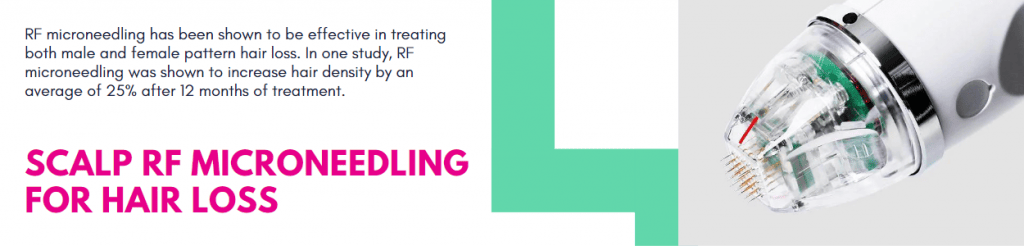

Revolutionise Your Hair Regrowth Journey with Scalp RF Microneedling
- ⭐ RF Microneedling and AGA Treatment. RF microneedling + minoxidil can help treat AGA (male pattern baldness).
- ⭐ Efficacy in Pattern Hair Loss. RF microneedling is effective for hair loss in both men and women.
- ⭐ Study Results on Hair Density Increase. A study found that RF microneedling can improve hair density by 25% after one year.
- ⭐ Adjustable Depth of Microneedling. Microneedling depth can be customized from 0.5 mm to 2.5 mm.
- ⭐ Flexible RF Microneedling Frequency. RF Microneedling sessions can be spaced from weekly to monthly, depending on your needs.
- ⭐ Award-Winning. Wellaholic’s treatments have been recognized by top beauty publications such as Daily Vanity, Beauty Insider, and Tropika Club Magazine.
- ⭐ Over 2000 Verified Customer Reviews. Wellaholic has over 30 industry awards and over 2000 positive reviews from customers, and >50% are repeat customers.