


Bounce Back from Pregnancy: 10 Easy Exercises to Heal Diastasis Recti
7 Easy Exercises for Diastasis Recti in Singapore
Treatment Benefits
Can you heal diastasis recti after pregnancy through exercise?
Diastasis recti recovery involves strengthening the deep transverse abdominis muscles and connective tissues through targeted, low-impact movements to gradually close the abdominal gap. Wellaholic’s expert team commonly observes that combining deep core exercises with high-intensity electromagnetic energy helps accelerate muscle density recovery. While this approach works best for individuals with mild to moderate abdominal separation, it cannot fully correct severe cases that may require surgical intervention. This non-invasive approach is highly popular among busy Singapore mothers seeking effective post-confinement recovery solutions that fit seamlessly into their active lifestyles.
Introduction

You’re standing in front of the mirror in a fitting room at Somerset, trying to zip up those favorite pre-pregnancy jeans, but the stubborn “mummy pooch” simply refuses to budge. For many women in Singapore, the physical toll of pregnancy isn’t just about weight—it’s about the separation of the abdominal muscles, known as diastasis recti.
This condition can lead to lower back pain and a feeling of core instability that makes chasing a toddler through the Singapore Botanic Gardens feel like a marathon. Fortunately, healing is possible with the right movements and professional-grade support.
This guide outlines 10 effective exercises to reclaim your core strength and explains how technology can bridge the gap in your recovery journey.
10 Easy Exercises to Heal Diastasis Recti in Singapore
Healing the “mummy pooch” requires a shift in focus from traditional crunches to deep internal stability. Wellaholic’s expert team commonly observes that jumping back into high-intensity workouts too soon can actually worsen the abdominal gap.
1. Diaphragmatic Breathing (The Foundation)
The first step in any post-pregnancy journey is re-learning how to breathe. Place one hand on your chest and the other on your belly; as you inhale, let your belly expand, and as you exhale, gently pull your navel toward your spine to engage the deep core.
2. Pelvic Tilts
Lying on your back with knees bent, use your lower abs to tilt your pelvis toward your chin, flattening your lower back against the floor. This subtle movement is essential for re-activating the pelvic floor and lower transversus abdominis.
3. Heel Slides
Maintain a neutral spine while lying down and slowly slide one heel out until your leg is straight, then pull it back in. This exercise challenges your core to remain stable while your limbs are in motion without putting pressure on the abdominal midline.
4. Toe Taps
With your legs in a tabletop position (knees bent at 90 degrees), slowly lower one toe to touch the floor and return to center. This is a progression from heel slides that requires more control over the lower abdominal wall.
For many Singaporean mums, the term “diastasis recti” (DR) often comes up in postpartum conversations. Simply put, DR is the separation of your “six-pack” abdominal muscles (rectus abdominis) down the midline of your belly. This common condition occurs when the connective tissue (linea alba) stretches and thins during pregnancy, making space for your growing baby.
Recognising DR is key to effective postpartum recovery. Symptoms often include a persistent “mummy tummy” or a bulge in your midsection, especially when you try to sit up. You might also experience lower back pain, poor posture, or even pelvic floor issues. A simple self-check involves lying on your back, knees bent, and gently lifting your head and shoulders while feeling for a gap or bulge above your belly button.
It’s vital to address abdominal separation, not just for aesthetics but for your overall core strength and women’s health. While common, proper diagnosis and a safe, guided recovery plan are essential. Understanding DR is the first step towards healing and reclaiming your core strength.
5. Side-Lying Leg Lifts
Lying on your side helps take the pressure off the linea alba (the connective tissue between your abs). Lifting your top leg while keeping your core braced helps strengthen the obliques and hips, which support the overall core structure.
6. Glute Bridges
Lifting your hips off the floor while squeezing your glutes helps stabilize the posterior chain. A strong back and gluteal group take the “load” off your front abdominal muscles, allowing the diastasis recti to heal more effectively.
7. Modified Bird-Dog
On all fours, extend one arm and the opposite leg slightly off the floor. Focus on keeping your belly drawn in and your back flat like a table, avoiding any “doming” or bulging of the stomach muscles.
8. Cat-Cow
This gentle yoga transition helps with spinal mobility. During the “Cat” phase, emphasize the upward pull of the belly to gently tension the abdominal wall without overstretching the connective tissue.
9. Standing Core Bracing
You don’t always need to be on a mat; practice “zipping up” your abs while waiting for the MRT or standing in line for coffee. Imagine pulling your hip bones toward each other to create a natural internal corset.
10. Modified Side Planks
Unlike front planks, which can put too much downward pressure on a weak core, side planks on your knees are safer. They target the internal and external obliques, providing lateral stability to the torso.

The Science of Linea Alba Recovery and Core Physiology
Diastasis recti occurs when the linea alba—the connective tissue that holds the rectus abdominis together—stretches and thins during pregnancy. For many women, muscle memory alone is not always enough to restore the original tension of this tissue.
The gap is not just a cosmetic issue; a weakened midline compromises the entire functional core, leading to pelvic floor dysfunction and chronic back issues. Scientific recovery focuses on hypertrophy of the transverse abdominis, which acts as a “girdle” to pull the two sides of the rectus abdominis back together. Professional-grade assessments are often recommended to ensure the gap is closing from the “inside out,” rather than just tightening the surface muscles.

The Wellaholic Bridge: Accelerating Results with WellaMuscle™
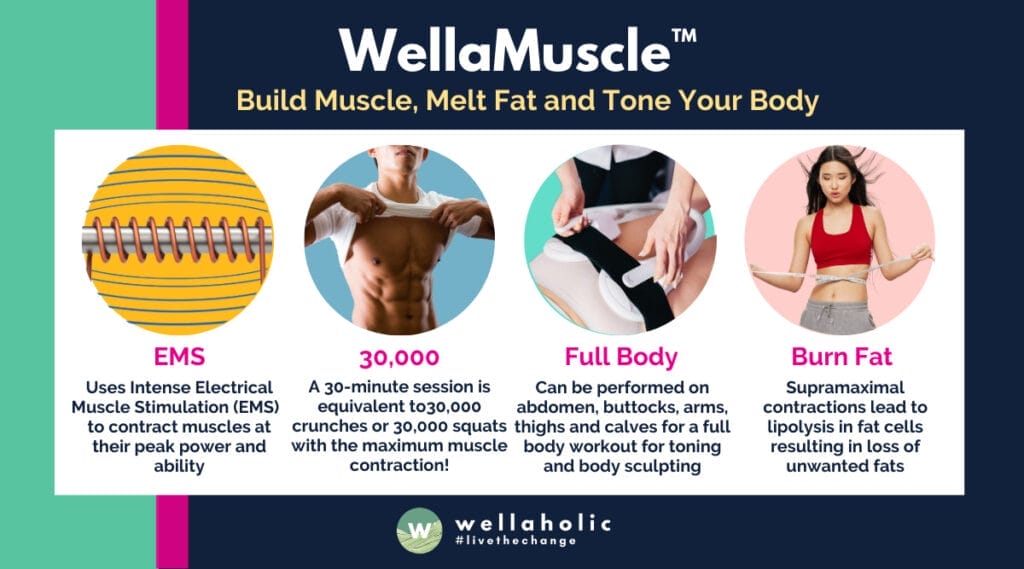
While the 10 exercises listed above are vital for long-term health, many Singapore customers find that progress can be slow, especially when balancing a career and motherhood. This is where Wellaholic’s WellaMuscle™ HI-EMT technology provides a significant advantage.
WellaMuscle™ uses high-intensity electromagnetic energy to induce a very high number of supramaximal muscle contractions in a single session—something impossible to achieve through manual exercise alone. Wellaholic’s expert team commonly observes that these intense contractions help thicken the muscle fibers and improve the structural integrity of the core, providing a ‘jumpstart’ to the healing process.
By combining WellaMuscle™ with a consistent exercise routine, customers can often see more visible improvements in their abdominal contour and functional strength.

Pricing & Transparency
Wellaholic maintains all-inclusive transparency with no hidden costs. All prices below include 9% GST.
WellaMuscle™ HI-EMT Muscle Sculpting
| Plan Type | Price Per Session | Total Price |
| 1 Session | $249 | $249 |
| 3-Session Plan | $237 | $711 |
| 6-Session Plan | $224 | $1,344 |
| 12-Session Plan | $199 | $2,388 |
Afternoon Advantage (AA) – 20% Off Subscriptions
Valid Mon–Fri, 11am – 5pm
| Plan Type | Monthly Rate | Savings |
| 6-Month Unlimited (AA) | $399 / month | 20% Off Standard |
| 12-Month Unlimited (AA) | $319 / month | 20% Off Standard |
Note: Unlimited plan prices for WellaMuscle™ are UNVERIFIED and subject to verification against the latest Master Pricing Guide.

Customer Testimonial: WellaCavi Ultrasonic Cavitation
Wansai visited Wellaholic with a specific goal of sculpting and contouring his body, and chose the WellaCavi Ultrasonic Cavitation treatment to work towards that outcome. From the outset, he found the session to be handled with a high level of professionalism, with the team ensuring he was comfortable and informed throughout the procedure. The treatment itself delivered on his expectations, contributing meaningfully to his body contouring goals in a way that felt effective and worthwhile. Wansai’s overall experience at Wellaholic was a positive one, and his review reflects the kind of straightforward, results-oriented visit that many Singapore customers are looking for when exploring non-invasive body shaping options.
Read Actual Review by Customer
“I did Ultrasonic Cavi 360 with William. He was very good and professional. The treatment was effective and helps with my body contouring. Good experience.” (Source: Google Review)

Conclusion
Whether you are visiting our bright and accessible outlets in Somerset or Tanjong Pagar, or preferred suburban locations like Kovan and Upper Changi, Wellaholic is committed to supporting your postpartum journey. Healing diastasis recti is a marathon, not a sprint, but with the right combination of targeted core exercises and professional-grade HI-EMT technology, reclaiming your confidence is entirely within reach. Our expert team is ready to guide you through a customized plan that fits your busy Singaporean lifestyle, ensuring you feel strong and capable in your “new” body.
Key Takeaways
- Prioritize Deep Core: Focus on the transverse abdominis rather than surface crunches to avoid worsening the abdominal gap. Diaphragmatic breathing is the essential starting point for all postpartum recovery.
- Avoid High Pressure: Movements that cause the belly to “dome” or bulge should be avoided until the core is stronger. Modified exercises like heel slides and side-lying lifts are safer alternatives.
- Consistency is Key: Daily engagement of the core muscles through functional movements helps rebuild the linea alba’s tension. Even standing core bracing during daily errands contributes to long-term healing.
- Leverage Technology: HI-EMT treatments like WellaMuscle™ can provide a high volume of intense contractions to accelerate muscle thickening. Many customers use this to supplement their home exercise routines for faster results.
- Transparency in Care: Wellaholic offers all-inclusive pricing and no hidden fees. This ensures a stress-free experience as you focus on your physical recovery.
FAQ
Q: How do I know if I have diastasis recti?
To check for diastasis recti, lie on your back with knees bent and perform a small crunch while feeling the area above and below your navel for a gap. Wellaholic’s expert team commonly observes that a gap wider than two finger-widths is a sign of separation.
🔵 Lie flat on your back.
🔵 Place fingers horizontally across your midline.
🔵 Lift your head slightly off the floor.
🔵 Feel for a soft gap between the muscle walls.
🔵 Note if there is any “doming” or protrusion.
🔵 Consult a professional if the gap feels deep or wide.
Q: When is it safe to start these exercises after giving birth?
Most women can begin gentle breathing and pelvic tilts within days of a natural birth, but it is vital to wait for your 6-week postnatal check-up before starting a full routine. For C-section deliveries, the recovery period may be longer to allow the incision to heal.
🔵 Start with diaphragmatic breathing immediately.
🔵 Wait for medical clearance for more active movements.
🔵 Listen to your body’s pain signals.
🔵 Avoid heavy lifting for at least six weeks.
🔵 Begin with low-impact floor exercises first.
🔵 Progress slowly to standing core work.
Q: Can diastasis recti be healed without surgery?
In many cases, diastasis recti can be significantly improved and functionally resolved through specialized exercise and muscle-building technology without needing a “tummy tuck.” Surgery is typically reserved for severe cases where the connective tissue is permanently damaged.
🔵 Most gaps respond well to muscle hypertrophy.
🔵 Focus on narrowing the gap rather than just “closing” it.
🔵 Improved core function often matters more than the gap size.
🔵 HI-EMT helps provide structural support.
🔵 Consistency prevents the need for invasive procedures.
🔵 Professional-grade treatments support natural healing.
Q: Which exercises should I absolutely avoid?
Traditional crunches, sit-ups, and heavy planks are high-risk movements that can increase intra-abdominal pressure and push the muscles further apart. You should also avoid heavy lifting or twisting movements that cause the midline to bulge.
🔵 BANNED: Standard sit-ups and crunches.
🔵 BANNED: Full front planks.
🔵 Avoid “V-sits” or boat pose.
🔵 Stop any movement that causes “doming.”
🔵 Limit heavy overhead presses initially.
🔵 Avoid deep backbends that overstretch the midline.
Q: How does WellaMuscle™ feel during the treatment?
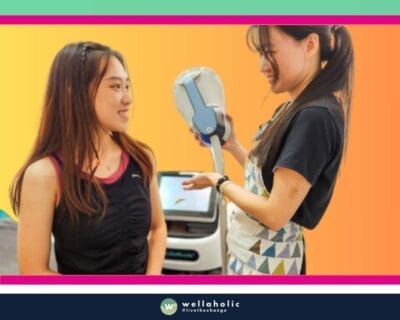
The treatment involves a series of intense muscle contractions that feel like a vigorous workout, but you are able to lie down and relax throughout the session. There is no downtime, and most customers describe the sensation as a deep “pulling” or “tapping” on the abs.
🔵 The probe feels secure on the skin.
🔵 You will feel rhythmic muscle pulses.
🔵 It is not painful but feels intense.
🔵 You can adjust the intensity levels.
🔵 No sweating or gym clothes are required.
🔵 Most sessions last exactly 30 minutes.
Q: How many WellaMuscle™ sessions are recommended for DR?
For effective core rebuilding, Wellaholic’s expert team typically recommends a series of 8 to 12 sessions spaced a few days apart. This frequency allows the muscle fibers to remodel and thicken, providing better support for the linea alba.
🔵 A trial session helps you experience the tech.
🔵 3 sessions provide a foundational boost.
🔵 6 to 12 sessions are ideal for significant structural change.
🔵 Sessions should be spaced 2-3 days apart.
🔵 Maintenance sessions can be done monthly.
🔵 Unlimited plans offer the best value for long-term recovery.

About Wellaholic’s Expert Team
Wellaholic’s treatments are designed and overseen by our founding team, whose qualifications include a CIDESCO Diploma in Aesthetics and a Level 3 Certification in Beauty Therapy & Salon Management from Brentwood College UK. With hands-on experience across IPL, SHR hair removal, and a wide range of aesthetic treatments, our founders bring both academic grounding and practical expertise to every service protocol at Wellaholic.
Our Aesthetic Director holds a CIDESCO certificate in skin care and a Bachelor of Health Science (Aesthetics) from Torrens University of Australia, with over a decade of industry experience spanning Singapore and Australia. Her background includes a senior role at a leading laser aesthetics group, giving her deep insight into safe and effective treatment delivery across diverse skin types.
Together, Wellaholic’s expert team has served over 18,000 customers across four outlets in Singapore — Somerset, Tanjong Pagar, Kovan, and Upper Changi — and has been recognised at the Beauty Insider and Daily Vanity Awards.
Contact us at supportwellaholic.com
GET IN TOUCH
Book Now Pay Later

WellaMuscle™ – Build Muscle, Melt Fat & Tone Your Body
- ⭐ HI-EMT Technology. WellaMuscle™ uses High-Intensity Electromagnetic Technolog (HI-EMT) to stimulate muscle contractions and burn fat cells in targeted areas of the body.
- ⭐ 16.3% Increase in Muscle Mass. According to clinical studies, treatments like WellaMuscle™ can help you gain up to 16.3% more muscle mass in the treated areas after four sessions.
- ⭐ Effective on Abs, Buttocks, Arms, Thighs and Calves. WellaMuscle™ is effective on the large muscle groups of the abdomen and buttocks, as well as the smaller muscle groups of the arms, thighs, and calves.
- ⭐ Award-Winning. Wellaholic’s treatments have been recognized by top beauty publications such as Daily Vanity, Beauty Insider, and Tropika Club Magazine.
- ⭐ Over 2000 Verified Customer Reviews. Wellaholic has over 2000 positive reviews from customers, and >50% are repeat customers.