



The 2026 Singapore Authority Guide to Clinical Aesthetic Safety & Risk Mitigation
Is professional aesthetic treatment in Singapore safe?
Yes, professional aesthetic treatments in Singapore are generally safe when performed by trained specialists using properly maintained equipment. At Wellaholic, our senior therapists complete structured training programmes and follow strict hygiene protocols, with safety prioritised throughout every session.

Introduction
For many Singapore professionals, the real cost of a rushed lunch-hour facial only becomes apparent when a persistent, inflamed mark refuses to fade under the harsh MRT cabin lights. Wellaholic’s expert team approaches aesthetic care with a structured, data-informed methodology designed to support your skin barrier and long-term skin health.
In this guide, Wellaholic’s expert team walks through the safety considerations behind professional aesthetic treatments, common risks of unregulated alternatives, and what a transparent treatment plan looks like at Wellaholic.

The DIY Hazard and Dermal Trauma
The appeal of home-use aesthetic devices has grown, but they often carry real risks of skin damage. Unlike professional systems calibrated for specific skin depths and melanin indices, generic DIY kits lack precise energy controls. Wellaholic’s expert team frequently observes that unregulated home devices can lead to scarring, thermal burns, or severe hyperpigmentation, particularly given Singapore’s high UV index.
Professional treatments help mitigate these risks through regulated, well-maintained technology. For instance, our WellaFacial™ 3X protocol uses equipment precisely tuned to the customer’s specific dermal density. By avoiding the “dragging” motion of manual home rollers and the uncalibrated flashes of consumer IPLs, we aim to keep the epidermal layer intact while supporting the deeper reticular dermis for genuine repair.
Understanding the Risk of Facial Cellulitis
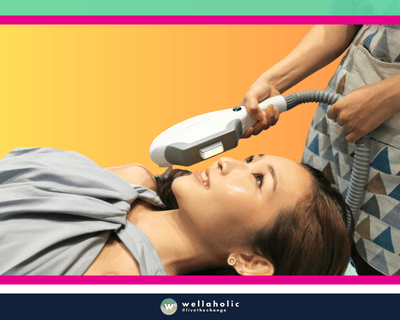
Facial cellulitis is a deep-tissue bacterial infection that can rapidly escalate if the skin barrier is compromised. In Singapore’s humid climate, bacterial proliferation is accelerated, making sterile environments non-negotiable. Traditional salons or unverified home-based setups often lack the rigorous sanitisation protocols required to help prevent bacterial entry during extractions or microneedling procedures. Our senior therapists ensure that all treatments are conducted under strict hygiene standards to help maintain the integrity of the skin barrier.
How Beauty and Aesthetic Salons Are Regulated in Singapore
Beauty and aesthetic salons in Singapore, including Wellaholic, fall under a different regulatory category from medical aesthetic clinics. Non-medical services such as facials, hair removal, and body treatments are governed by the Environmental Public Health Act, with hygiene standards set by the National Environment Agency (NEA). This is distinct from procedures such as injectables or certain lasers, which require a registered medical practitioner operating under Ministry of Health and Singapore Medical Council guidelines.
Wellaholic’s expert team follows NEA hygiene standards across all four outlets, covering equipment sanitisation, treatment room cleanliness, and general facility hygiene. Understanding which regulatory category a salon falls under helps customers make an informed choice, and hygiene compliance is a meaningful part of that picture regardless of which category a treatment sits in.
The Danger of Banned Ingredients
The Health Sciences Authority (HSA) frequently flags non-notified skincare products circulating in the grey market. These products often contain dangerous levels of mercury, hydroquinone, and high-dose steroids. While they may offer rapid, superficial lightening, the biological damage can include thinned epidermis, compromised immunity, and long-lasting hyperpigmentation. Professional consultations are valuable for carefully selecting active ingredients that support long-term skin resilience rather than degrading it.
Diagnosing Facial Marks Accurately
A common pitfall among consumers is the misdiagnosis of facial marks. Laypeople often confuse post-inflammatory erythema (PIE), post-inflammatory hyperpigmentation (PIH), and active bacterial lesions. Treating a bacterial lesion with harsh physical exfoliants can spread the infection, while using incorrect acids on PIE can worsen inflammation. Professional evaluation by our senior therapists helps ensure that treatments are matched to the specific nature of the mark, avoiding further irritation.
Transparent Pricing as a Safety Standard
Financial transparency is fundamentally a safety feature. The traditional aesthetic industry often employs hidden surcharges and high-pressure upselling, placing customers under financial pressure. This can lead individuals to agree to unnecessary or overly aggressive treatments. Wellaholic’s transparent pricing supports a calmer, more focused treatment environment where safety protocols are never rushed. All prices are final and include 9% GST.

Facial Care Roadmap (Transparent Pricing)
Our facial plans are structured to support the consistent cadence that skin generally benefits from over time. Single sessions provide entry-level access, while 12-session roadmaps offer the best per-session rate for longer-term care.
| Service | 1 Session | 12 Sessions (Per Session) | Total Roadmap |
| WellaFacial™ 3X | $499 | $319 | $3,828 |
| Gold RF Microneedling | $269 | $199 | $2,388 |
| Microneedling | $249 | $189 | $2,268 |
| Elight™ Facial Collagen Boost | $249 | $189 | $2,268 |

Key Takeaways
- Transparent Pricing: 9% GST-inclusive pricing removes pressure, supporting a safer, protocol-driven environment.
- Uncalibrated DIY Risks: Home-use devices carry a real risk of skin damage and long-lasting hyperpigmentation.
- Climate & Infection: Singapore’s humidity makes sterile treatment settings important for preventing facial cellulitis.
- HSA-Flagged Substances: Grey-market products containing mercury or steroids can seriously compromise long-term skin resilience.
- Professional Evaluation: Accurate assessment of facial marks helps avoid treatments that could make things worse.
Frequently Asked Questions (FAQ)
Q: How does Singapore’s climate affect aesthetic treatment recovery and facial cellulitis risk?
Singapore’s high humidity and constant heat create conditions favourable to bacterial growth, increasing the risk of deep-tissue infections if the skin barrier is broken. Proper sanitisation and professional aftercare are important for navigating recovery safely in this climate.
🔵 Bacterial Growth – High humidity can accelerate the multiplication of surface bacteria.
🔵 Sweat Irritation – Trapped perspiration can irritate freshly treated facial pores and micro-channels.
🔵 Barrier Compromise – Unregulated treatments can damage the epidermis, creating entry points for infection.
🔵 Sterile Practices – Professional outlets follow sanitisation protocols that home setups typically cannot replicate.
🔵 UV Exposure – Singapore’s intense UV index calls for strict sun protection post-treatment to help prevent PIH.
🔵 Professional Oversight – Supervised recovery helps support early attention to any adverse inflammatory responses.
Q: Why are professional Elight™ systems different from home-use IPL kits for pigmentation?
Professional Elight™ systems use calibrated, dual IPL-RF energy designed to target melanin clusters without damaging surrounding skin. Generic home kits typically lack advanced cooling and precise energy settings, which can raise the risk of thermal burns.
🔵 Dual Energy – Combines IPL and Radio Frequency for more precise depth targeting.
🔵 Cooling Support – Contact cooling helps protect the epidermis during the flash.
🔵 Energy Calibration – Professional machines are tuned to the customer’s specific melanin index.
🔵 Gradual Approach – Gradual energy delivery is designed to reduce the “rebound” effect sometimes seen with lower-grade IPLs.
🔵 Wavelength Precision – Specialised filters aim to target pigment while sparing surrounding tissue.
Q: What are the risks of using skincare with banned ingredients in Singapore?
The use of non-notified products containing mercury, hydroquinone, or high-dose steroids can lead to serious structural damage to the skin. While individuals may see rapid superficial changes, the underlying dermal matrix is weakened.
🔵 Epidermal Thinning – Steroids can rapidly weaken the skin’s structural integrity.
🔵 Toxicity Risks – Mercury absorption can lead to serious health issues over long-term use.
🔵 Rebound Pigmentation – Unregulated hydroquinone can cause darker, long-lasting spots upon cessation.
🔵 Barrier Damage – Stripped skin becomes more susceptible to bacterial infections like cellulitis.
🔵 Immune Suppression – Topical steroids can reduce the skin’s natural ability to fight off environmental pathogens.
🔵 Professional Alternatives – In-outlet skin boosters offer an alternative approach without the toxicity risk of unregulated products.
Q: How does Wellaholic’s transparent pricing model support treatment safety?
Transparent pricing supports a calmer treatment environment by removing high-pressure upselling tactics. When customers know the 9% GST-inclusive cost upfront, they don’t face pressure to agree to overly aggressive treatments.
🔵 No Hidden Fees – All quoted prices are final and include 9% GST.
🔵 Reduced Pressure – Supports customers in avoiding unsafe treatments agreed to under pressure.
🔵 Protocol Focus – Therapists can concentrate on safety execution rather than sales targets.
🔵 Predictable Planning – Clear pricing supports appropriate spacing of treatment recovery intervals.
🔵 Afternoon Advantage – Offers predictable savings on long-term plans to encourage consistent care.
🔵 Trust Foundation – Transparency supports mutual trust between customers and their senior therapist.
Q: Why should facial marks be evaluated by professionals rather than treated with DIY kits?
Facial marks stem from distinct causes, including vascular changes, melanin overproduction, or active infection. Misdiagnosing a mark at home often leads to incorrect treatment choices that can make the mark worse.
🔵 Identifying the Mark – Distinguishing between vascular redness (PIE) and melanin (PIH).
🔵 Appropriate Modalities – Matching the right technology (e.g., LED vs. Microneedling) to the mark.
🔵 Infection Prevention – Avoiding the spread of bacteria through incorrect physical exfoliation.
🔵 Depth Assessment – Determining if the pigmentation is closer to the surface or deeper in the skin.
🔵 Gradual Recovery – Professional treatments work with the skin’s natural healing timeline.
🔵 Avoiding Scars – Improper home extraction of marks can lead to long-lasting indented scarring.
Q: What makes Gold RF Microneedling different from manual derma-rolling?
DIY derma-rolling often relies on dragging unsterilised needles across the skin, which can cause microscopic tears. Gold RF Microneedling uses sterile, gold-plated needles that deliver radiofrequency energy to the dermis without surface tearing.
🔵 Sterile Environment – Single-use, sealed needle cartridges for every session.
🔵 Adjustable Depth – Needle depths are adjusted to suit the treatment area, allowing the approach to be tailored to different facial zones.
🔵 Controlled Energy – Radiofrequency is delivered below the epidermis to support collagen production.
🔵 No Dragging – Automated stamping helps avoid the “track mark” tearing common with manual rollers.
🔵 Gold Plating – Supports energy conductivity and helps reduce the risk of metal sensitivity.

Wellaholic’s Expert Team
Wellaholic’s treatments are designed and overseen by our expert team, whose qualifications include a CIDESCO Diploma in Aesthetics and a Level 3 Certification in Beauty Therapy & Salon Management from Brentwood College UK. With hands-on experience across laser hair removal, skin rejuvenation, and body contouring treatments, our team brings both academic grounding and practical expertise to every service protocol at Wellaholic.
Contact us at support@wellaholic.com

Wellaholic’s Aesthetic Direction Team
Our Aesthetic Director brings over a decade of expertise to Wellaholic, including prior experience in laser treatments and skincare. Her educational background includes a CIDESCO certificate in skin care and a Bachelor of Health Science (Aesthetics) from Torrens University of Australia, reflecting a commitment to staying current in the aesthetics field.
Contact us at support@wellaholic.com
GET IN TOUCH