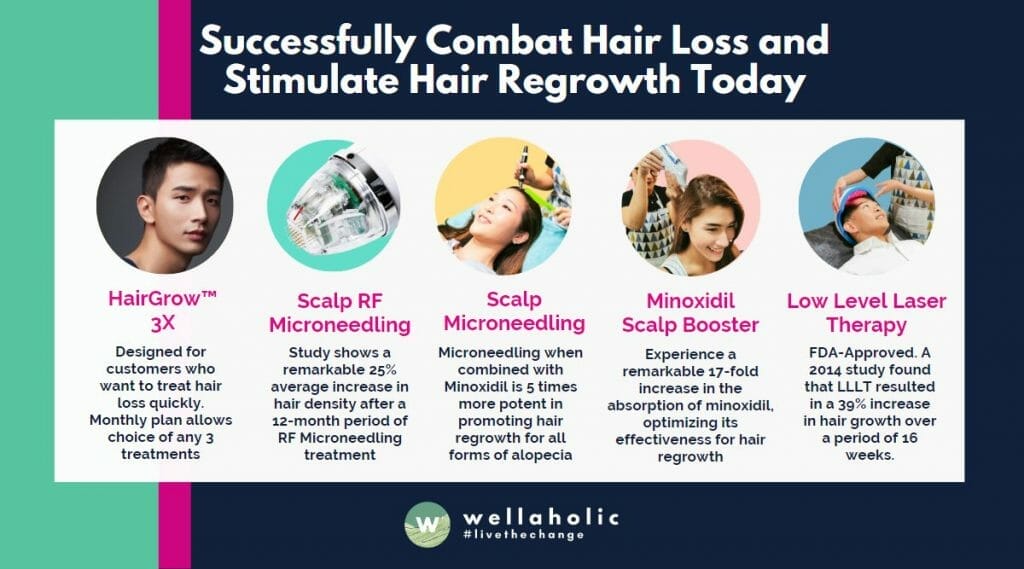



Does LLLT Actually Work for Hair Loss? The Evidence
Does Low-Level Laser Therapy Actually Work for Hair Loss?
How low-level laser therapy works for you:
Wakes up dormant follicles by delivering targeted light energy to the scalp to support a healthy growth cycle.
Improves blood circulation in the scalp to enhance oxygen and essential nutrient delivery to the hair roots.
Helps clear DHT buildup and other natural residues from the hair roots.
Provides a non-invasive and safe method requiring zero downtime, allowing customers to resume daily activities immediately.
Does LLLT actually work for hair loss treatment?
Low-level light therapy (LLLT) uses specific wavelengths of red light to stimulate cellular activity in hair follicles, encouraging cellular respiration and blood flow to promote hair growth. Clinical evidence supports that LLLT effectively increases hair density for both men and women experiencing pattern hair loss. However, this non-invasive approach works best for early-stage thinning and cannot revive completely dormant follicles where hair loss is advanced. This convenient, non-invasive option is highly suited for busy Singapore professionals seeking to address hair thinning discreetly amidst their hectic schedules.

Introduction
She’s brushing her hair back from her face in the bathroom mirror, the way she does every morning, when she notices it again: the part looks a little wider than it used to, and there’s more scalp visible under the bathroom light than she remembers. It’s not dramatic. Nobody else would necessarily notice. But she’s noticed, and now she can’t stop noticing.
Moments like this are usually what send people searching for options, and low-level laser therapy, or LLLT, comes up often in that search.
In this guide, Wellaholic’s expert team looks at what the published research actually shows about LLLT and hair density, how the treatment is understood to work, and where clinic-administered LLLT fits alongside the home-use devices most of that research evaluated.
What the Research Actually Shows
The most detailed recent data comes from a 2026 prospective trial published in Dermatologic Therapy, which followed 68 patients using a home-use, helmet-type LLLT device three times a week over 48 weeks. Hair density increased from a baseline average of 99.2 hairs per square centimetre to 124.2 hairs per square centimetre by week 48, a gain of roughly 25 hairs per square centimetre, a statistically significant result. Many Wellaholic customers considering LLLT are looking for exactly this kind of gradual, sustained change rather than an immediate transformation.
This finding sits alongside a broader body of systematic reviews reaching a similar conclusion. A 2021 systematic review and meta-analysis of FDA-approved home-use LLLT devices, covering seven randomized controlled trials, found a statistically significant increase in hair density compared to sham devices, with the effect present in both men and women and across comb-style and helmet-style devices. A separate meta-analysis covering eleven randomized controlled trials across eight studies reached the same general conclusion, and noted, somewhat counterintuitively, that lower-frequency treatment schedules were associated with better outcomes than higher-frequency ones.
A broader evidence-based review looking across male pattern hair loss, female pattern hair loss, alopecia areata, and chemotherapy-induced alopecia found that LLLT stimulated hair growth across these different conditions in controlled trials, with the strongest and most consistent evidence specifically in pattern hair loss.
Across this body of research, the direction of effect is consistent: LLLT outperforms sham treatment on hair density, even though study designs, devices, and populations vary.
How LLLT Is Understood to Work
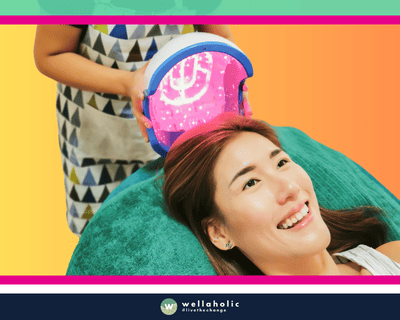
LLLT is generally understood to work through photobiomodulation: low-level red light is absorbed by cells in the hair follicle, where it’s thought to stimulate activity in cellular structures involved in energy production. This is believed to support the follicle’s transition into and through its active growth phase, rather than acting as a direct stimulant to hair itself. The exact mechanism at a molecular level is still an active area of research, and the established literature describes this as the most likely explanation rather than a fully settled certainty.
This is a fundamentally different mechanism from mechanical or chemical approaches to hair loss.
LLLT doesn’t remove or block anything; it’s understood to work by supporting follicle activity rather than intervening directly in the underlying hormonal pathway the way some other treatments do.
Where Wellaholic’s LLLT Service Fits In
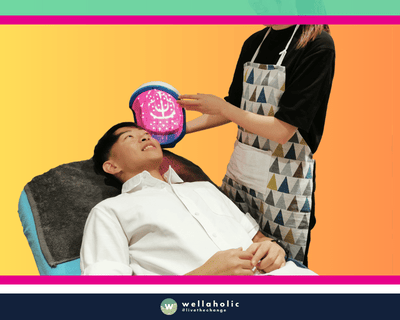
Wellaholic offers LLLT as an in-clinic treatment at its Upper Changi outlet, inside the MRT station itself, one of four Singapore locations. It’s worth being direct about one distinction here: most of the research above evaluated home-use devices, used by patients themselves several times a week over months, not a single delivery method administered in a clinic setting. The research supports the underlying mechanism and the general direction of effect for LLLT as a category of treatment, not a guarantee that any specific delivery method, including Wellaholic’s, reproduces the exact outcomes measured in these studies.
Session frequency and format for clinic-administered LLLT differ from the three-times-weekly, months-long home routines used in most of the cited trials.
Anyone considering LLLT at Wellaholic can discuss with Wellaholic’s expert team how the in-clinic protocol compares to what’s been studied, and what a realistic expectation looks like given that difference.

LLLT Pricing at Wellaholic
For anyone weighing LLLT as an option after reading the research above, Wellaholic offers it as a per-session treatment, priced the same as Scalp Microneedling and Minoxidil sessions.
| Treatment | 1 Session | 3 Sessions | 6 Sessions | 12 Sessions |
| Per-Session Rate | $179 | $170 | $161 | $143 |
| Price | $179 | $510 | $966 | $1,716 |
Wellaholic’s expert team can talk through session frequency and what a realistic treatment course looks like at a consultation.

Customer Testimonial: Scalp Microneedling & LLLT Treatment
Linus visited Wellaholic to address hair loss and scalp concerns, exploring both Low-Level Laser Therapy (LLLT) and Scalp RF Microneedling as part of a structured restoration protocol. What stood out immediately was the absence of hard-sell pressure — the team took time to understand his specific scalp condition, explained both treatment options clearly, and helped him arrive at a protocol aligned with his goals. Across multiple sessions, he found the approach consistently calm, considered, and transparent. For Linus, the experience was defined as much by the trust built over time as by the treatments themselves — and he recommends Wellaholic without reservation for anyone serious about long-term scalp and hair restoration.
Read Actual Review by Customer
“From my first visit, I was impressed by the patience, attentiveness, and complete lack of hard-sell pressure. The team took time to understand my scalp condition, explained both LLLT and RF microneedling in a clear, measured way, and helped me decide on a protocol that aligned with my goals. Throughout each session, the approach remained composed and considerate — no overselling, no overpromising. If you’re serious about hair or scalp restoration and want someone ethical, knowledgeable, and calm, Wellaholic is the place to go.” (Source: Google Review)

CONCLUSION
The evidence for LLLT and hair density is more substantial than for many hair loss interventions. Several systematic reviews and a recent 12-month trial all point in the same direction, showing a measurable increase in hair density compared to sham treatment. That’s a meaningfully different starting point than an unproven or purely anecdotal treatment, even though the research doesn’t support guaranteed or immediate results for any individual.
LLLT is available at Wellaholic’s Upper Changi outlet, one of four Singapore locations alongside Somerset, Tanjong Pagar, and Kovan. Given the distinction between clinic-administered and home-use delivery covered above, anyone considering it is best served by a direct conversation with Wellaholic’s expert team about what to expect.
KEY TAKEAWAYS
- Multiple systematic reviews and meta-analyses show LLLT significantly increases hair density compared to sham treatment.
- A 2026 prospective trial found hair density increased from 99.2 to 124.2 hairs per square centimetre over 48 weeks of home-use LLLT, a gain of roughly 25 hairs per square centimetre.
- Most of the cited research evaluates home-use devices, a meaningfully different delivery method from clinic-administered LLLT.
- The reviewed studies found effects in both male and female pattern hair loss, not one gender specifically.
- LLLT is generally described as safe and non-invasive across the reviewed literature, with no device-related adverse events reported in the most recent long-term trial.
Frequently Asked Questions (FAQ)
Does LLLT actually work for hair loss?
The published evidence, taken as a whole, supports a real effect.
🔵 Multiple systematic reviews found significantly greater hair density with LLLT than with sham treatment
🔵 A 2026 prospective trial recorded a gain of roughly 25 hairs per square centimetre over 48 weeks of home use
🔵 Effects were found across both comb-style and helmet-style devices
🔵 The evidence is strongest specifically for pattern hair loss, compared to other hair loss types
🔵 Individual results vary, and not every study reviewed showed the same magnitude of effect
🔵 This is not the same as a guarantee of results for any specific person
How does clinic LLLT differ from at-home devices?
Most of the research above was conducted on home-use devices, not clinic-administered treatment, which is a meaningful distinction.
🔵 Home-use trials typically involved multiple sessions per week over several months, self-administered
🔵 Clinic-administered LLLT follows a different session frequency and format
🔵 The underlying mechanism is the same technology category, low-level light therapy
🔵 Specific outcomes from home-use studies shouldn’t be assumed to transfer exactly to a clinic protocol
🔵 Wellaholic’s expert team can explain how the in-clinic approach compares to what’s been studied
🔵 Both approaches fall under the same general evidence base for LLLT as a treatment category
How long before I might see results?
The cited research points to a gradual timeline rather than a quick one.
🔵 The 2026 trial measured meaningful change by week 48, not within the first few weeks
🔵 Earlier systematic reviews generally studied treatment courses of several months or longer
🔵 Results build gradually, consistent with how hair follicle cycles work
🔵 No cited study found immediate or single-session results
🔵 Consistency of use appears to matter across the studies reviewed
🔵 Individual timelines will vary, and Wellaholic’s expert team can’t predict a specific result for any one person
Is LLLT safe?
Across the reviewed literature, LLLT is generally described as safe and well tolerated.
🔵 The cited studies reported LLLT as non-invasive with a low rate of adverse events
🔵 The 2026 prospective trial reported no device-related adverse events over 12 months
🔵 LLLT does not involve needles or downtime in the studies reviewed
🔵 It is not a substitute for medical evaluation of underlying hair loss causes
🔵 Anyone with a scalp condition or other medical concern should raise it with Wellaholic’s expert team before starting
🔵 Safety data in the reviewed literature comes primarily from home-use device studies, as noted above
Who is LLLT suitable for?
The reviewed studies covered a fairly broad range of people.
🔵 Both male and female pattern hair loss were represented across the cited studies
🔵 Effects were reported across mild to severe hair loss in the 2026 trial specifically
🔵 A broader evidence review also found effects in alopecia areata and chemotherapy-induced alopecia, alongside pattern hair loss
🔵 Suitability for a specific individual depends on the underlying cause of hair loss, which LLLT alone can’t diagnose
🔵 A consultation with Wellaholic’s expert team can help clarify whether LLLT is a reasonable starting point
🔵 LLLT is often considered alongside, not necessarily instead of, other options
How does LLLT compare to Minoxidil?
Both are established, evidence-backed options, though they work differently.
🔵 Minoxidil is a topical treatment applied directly to the scalp; LLLT is a light-based device treatment
🔵 Some of the reviewed literature discusses combination use of LLLT alongside topical treatments, not exclusively one or the other
🔵 Both are supported by controlled trial evidence for pattern hair loss specifically
🔵 Mechanism differs: Minoxidil works topically at the follicle level, LLLT is believed to work through photobiomodulation
🔵 A specific numeric comparison of effectiveness isn’t something that can currently be stated with confidence
🔵 Wellaholic’s expert team can discuss which option, or combination, might suit a specific situation
About Wellaholic’s Expert Team
Wellaholic’s treatments are designed and overseen by our founding team, whose qualifications include a CIDESCO Diploma in Aesthetics and a Level 3 Certification in Beauty Therapy & Salon Management from Brentwood College UK. With hands-on experience across IPL, SHR hair removal, and a wide range of aesthetic treatments, our founders bring both academic grounding and practical expertise to every service protocol at Wellaholic.
Our Aesthetic Director holds a CIDESCO certificate in skin care and a Bachelor of Health Science (Aesthetics) from Torrens University of Australia, with over a decade of industry experience spanning Singapore and Australia. Her background includes a senior role at a leading laser aesthetics group, giving her deep insight into safe and effective treatment delivery across diverse skin types.
Together, Wellaholic’s expert team has served over 18,000 customers across four outlets in Singapore — Somerset, Tanjong Pagar, Kovan, and Upper Changi — and has been recognised at the Beauty Insider and Daily Vanity Awards.
Contact us at support.
GET IN TOUCH
Book Now Pay Later

Low Level Laser Therapy to Stop Hair Loss
- ⭐ Cold Laser to Stimulate Hair Cell Growth. LLLT is a new hair loss treatment that uses cold laser light to stimulate cell growth and revitalize hair follicles.
- ⭐ Covers Entire Scalp. LLLT treatment is administered through our laser helmet that covers the entire scalp.
- ⭐ Effective for Male and Female Pattern Hair Loss. Clinical studies affirm that LLLT effectively treats pattern baldness in both genders and other hair loss types.
- ⭐ Safe and No Downtime. LLLT is generally considered safe and does not cause any significant side effects.
- ⭐ Award-Winning. Wellaholic’s treatments have been recognized by top beauty publications such as Daily Vanity, Beauty Insider, and Tropika Club Magazine.
- ⭐ Over 2000 Verified Customer Reviews. Wellaholic has over 30 industry awards and over 2000 positive reviews from customers, and > 50% are repeat customers.