


LLLT for Female Hair Loss: What the Research Shows
Low-Level Laser Therapy (LLLT) for Female Hair Loss
Is LLLT effective for female hair loss?
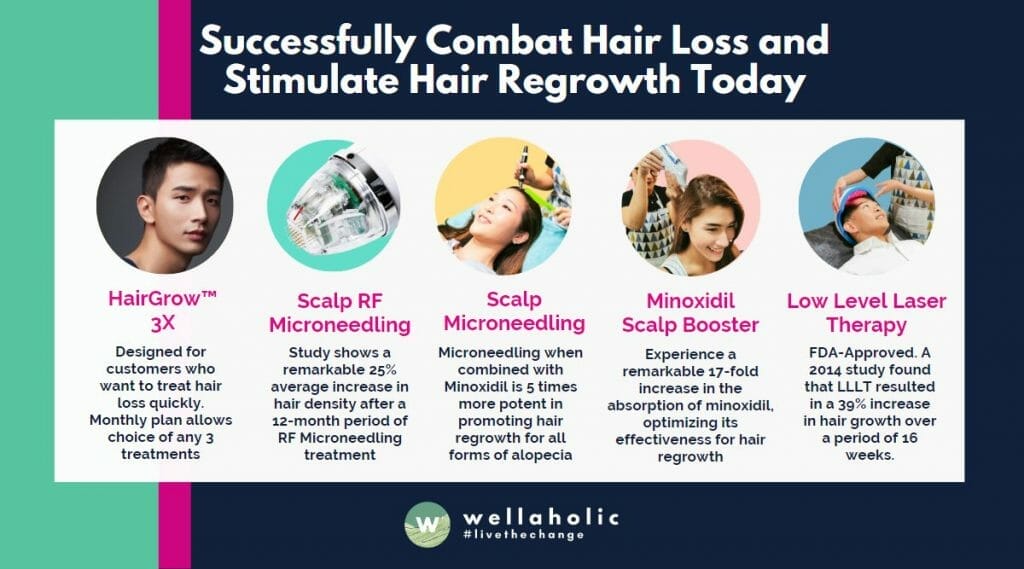
Low-level light therapy (LLLT) uses safe, low-level laser light to stimulate cellular activity in hair follicles, promoting increased blood flow and cellular respiration to encourage hair growth. Clinical evidence supports LLLT for improving hair density and diameter in women experiencing pattern hair loss, especially when combined with other topical treatments. However, it works best for early to moderate stages of thinning and cannot revive completely dormant hair follicles. This non-invasive approach is highly popular among busy Singapore professionals seeking convenient, lunchtime hair restoration solutions to combat thinning aggravated by year-round humidity.

Introduction
She’s parting her hair the same way she has for years, getting ready for a family dinner, when her sister leans over and says, gently, “Have you noticed your part looking wider lately?” She hadn’t, not really, not until someone else pointed it out. But once she looks properly in the mirror, under better light, she sees it too: a little more scalp visible along the part, a bit less volume at the crown than she remembers.
This kind of diffuse thinning at the part and crown, rather than a receding hairline, is the typical presentation of female pattern hair loss, and it’s different enough from the male pattern that borrowed advice doesn’t always apply.
In this guide, Wellaholic’s expert team looks at how female pattern hair loss presents and is staged, what the research specifically shows for LLLT in women, and what else should be ruled out before assuming pattern hair loss is the cause.

How Female Pattern Hair Loss Presents, and What LLLT Research Shows for Women
Female pattern hair loss typically presents as diffuse thinning across the crown and widening at the centre part, with the frontal hairline usually staying intact, a different pattern from the receding hairline and crown balding typical of male pattern hair loss. It’s staged using the Ludwig or Sinclair classification systems, which describe the degree of diffuse thinning, rather than the Hamilton-Norwood scale used for men, which tracks hairline recession and crown balding separately.
A 2024 randomized controlled trial in Chinese women with female pattern hair loss (Ludwig classification I to III, ages 18 to 44) compared 2% topical minoxidil alone against minoxidil combined with LLLT over 24 weeks. Many Wellaholic customers considering combination approaches are interested in exactly this kind of comparison. The combination group showed a statistically significant increase in mean hair diameter compared to minoxidil alone, though minoxidil alone performed better on one specific measure, the increase in intermediate hair percentage in the midscalp area, a reminder that combination therapy isn’t uniformly superior across every outcome measured.
A separate multicenter, sham-controlled trial evaluating a low-level laser device in both men and women, with 141 female subjects among 269 total screened, found a statistically significant increase in terminal hair density in both sexes after 26 weeks of treatment, independent of age, sex, or the specific device model used, with no serious adverse events reported.
A broader literature review covering ten randomized controlled trials, three of which evaluated women only, found that all sham-controlled studies showed a statistically significant increase in hair diameter or density.
How LLLT Works, and What to Rule Out First
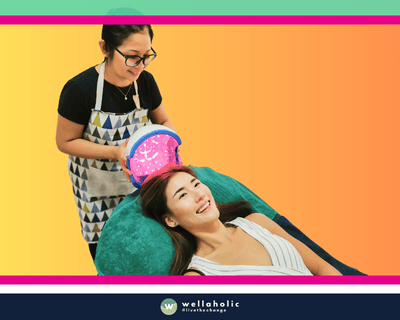
LLLT is generally understood to work through photobiomodulation: low-level red light is absorbed by cells in the hair follicle, where it’s thought to stimulate cellular activity that supports the follicle’s transition into its active growth phase. This is the same general mechanism described for pattern hair loss in men, though how well it translates specifically to female pattern hair loss is still an area of ongoing study.
Female hair thinning has a wider set of possible causes than male pattern hair loss, and it’s worth being direct about this before assuming any particular cause. Postpartum shedding, thyroid conditions, iron deficiency, and PCOS can all present as diffuse thinning that looks similar to female pattern hair loss on the surface.
A doctor should rule out these other causes before female pattern hair loss is assumed to be the explanation, since LLLT and other pattern-hair-loss treatments are built around that specific diagnosis, not thinning in general.
LLLT at Wellaholic: What to Expect
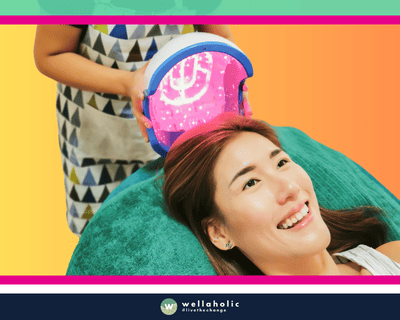
Wellaholic offers LLLT as an in-clinic treatment at its Tanjong Pagar outlet, in the CBD, one of its four Singapore locations. Hair loss can be a difficult topic to raise, and Wellaholic’s expert team is used to approaching it discreetly, without assuming anyone should feel embarrassed about asking. As with the general LLLT evidence, most of the research above evaluated home-use devices rather than clinic-administered treatment, a distinction worth understanding rather than assuming clinic sessions reproduce identical results.
Minoxidil, alongside LLLT, is often one of the first options people consider before looking into more involved treatments, and it’s reasonable to ask Wellaholic’s expert team how the two might work together for a specific situation, based on what the research above actually shows rather than general assumptions.

LLLT Pricing at Wellaholic
For anyone weighing LLLT after reading the research above, Wellaholic offers it as a per-session treatment, priced the same as Scalp Microneedling and Minoxidil sessions.
| Treatment | 1 Session | 3 Sessions | 6 Sessions | 12 Sessions |
| Per-Session Rate | $179 | $170 | $161 | $143 |
| Price | $179 | $510 | $966 | $1,716 |

Customer Testimonial: Scalp Microneedling & LLLT Treatment
Linus visited Wellaholic to address hair loss and scalp concerns, exploring both Low-Level Laser Therapy (LLLT) and Scalp RF Microneedling as part of a structured restoration protocol. What stood out immediately was the absence of hard-sell pressure — the team took time to understand his specific scalp condition, explained both treatment options clearly, and helped him arrive at a protocol aligned with his goals. Across multiple sessions, he found the approach consistently calm, considered, and transparent. For Linus, the experience was defined as much by the trust built over time as by the treatments themselves — and he recommends Wellaholic without reservation for anyone serious about long-term scalp and hair restoration.
Read Actual Review by Customer
“From my first visit, I was impressed by the patience, attentivene

CONCLUSION
The evidence specific to women isn’t as extensive as the broader pattern-hair-loss literature, but it points in a consistent direction: several trials that included or focused specifically on women found LLLT increased hair density or diameter compared to sham treatment, and one trial found a meaningful advantage to combining LLLT with minoxidil over minoxidil alone. None of this amounts to a guarantee for any individual, and a doctor should rule out other causes of thinning first.
LLLT is available at Wellaholic’s Tanjong Pagar outlet, one of four Singapore locations alongside Somerset, Kovan, and Upper Changi. Given how differently female pattern hair loss can present compared to what’s commonly discussed, a direct conversation with Wellaholic’s expert team is a reasonable starting point before assuming any specific treatment path.
KEY TAKEAWAYS
- Female pattern hair loss typically presents as diffuse thinning at the crown and centre part, not a receding hairline, and is staged differently (Ludwig/Sinclair) from male pattern hair loss (Hamilton-Norwood).
- Several randomized controlled trials specifically included or focused on women and found statistically significant increases in hair density or diameter with LLLT compared to sham treatment.
- A 2024 Chinese RCT found combining LLLT with minoxidil improved hair diameter more than minoxidil alone, though not every measured outcome favoured the combination.
- A doctor should rule out other causes of thinning, including postpartum shedding, thyroid conditions, iron deficiency, and PCOS, before assuming female pattern hair loss is the cause.
- LLLT is generally described as safe across the reviewed literature, though some studies reported minor, transient scalp-related effects.
Frequently Asked Questions (FAQ)
How does female hair loss differ from male pattern hair loss?
The pattern and staging system are both different.
🔵 Female pattern hair loss typically shows as diffuse thinning across the crown and a widening centre part
🔵 The frontal hairline usually stays intact, unlike typical male pattern recession
🔵 Staged using the Ludwig or Sinclair classification, not the Hamilton-Norwood scale used for men
🔵 Underlying causes and hormonal factors can differ between the two presentations
🔵 Diagnosis and treatment approach should reflect this difference rather than applying male-pattern assumptions
🔵 A doctor is best placed to confirm which pattern applies to a specific case
Does LLLT actually work for women specifically?
The research that specifically included or focused on women points toward a real effect, though it’s a smaller body of evidence than the general pattern-hair-loss literature.
🔵 A multicenter trial with 141 female subjects found significantly increased terminal hair density vs. sham after 26 weeks
🔵 A literature review of ten RCTs, three evaluating women only, found significant results across all sham-controlled studies
🔵 A 2024 Chinese RCT in women specifically found LLLT combined with minoxidil improved hair diameter more than minoxidil alone
🔵 Effects were reported across a range of severity in the studies reviewed
🔵 Individual results vary, and evidence specific to women remains smaller than the general literature
🔵 This is not a guarantee of results for any specific individual
Should LLLT be combined with other treatments?
One trial specifically compared combination therapy to minoxidil alone in women, with mixed but generally favourable results for the combination.
🔵 The 2024 Chinese RCT found significantly better hair diameter improvement with LLLT plus minoxidil than minoxidil alone
🔵 Minoxidil alone performed better on one specific measure in that same trial, so the advantage wasn’t universal across all outcomes
🔵 A specific numeric comparison of Minoxidil’s effectiveness or absorption isn’t something that can currently be stated with confidence
🔵 Combination approaches should be discussed with a doctor or Wellaholic’s expert team rather than self-directed
🔵 What works for one person’s presentation may not directly apply to another’s
🔵 Wellaholic’s expert team can talk through what combination, if any, makes sense for a specific situation
What other causes of hair thinning should be ruled out first?
Female hair thinning has a broader list of possible causes than male pattern hair loss, and this is worth taking seriously before assuming pattern hair loss.
🔵 Postpartum shedding, which is usually temporary and resolves on its own
🔵 Thyroid conditions, which can cause diffuse thinning
🔵 Iron deficiency, a common and treatable cause of hair thinning in women
🔵 PCOS, which can affect hair growth patterns
🔵 A doctor can run relevant tests to rule these out before assuming female pattern hair loss
🔵 LLLT and similar treatments are built around a pattern-hair-loss diagnosis specifically, not thinning in general
How long before I might see results?
The cited research points to a gradual timeline measured in months, not weeks.
🔵 The Chinese RCT measured outcomes at 12 and 24 weeks, not earlier
🔵 The multicenter trial with female subjects measured results at 16 and 26 weeks
🔵 No cited study found meaningful change within the first few weeks
🔵 Consistency of use appears to matter across the studies reviewed
🔵 Results build gradually, consistent with how hair follicle cycles work
🔵 Individual timelines vary, and Wellaholic’s expert team can’t predict a specific result for any one person
Who is a good candidate for LLLT?
The studies reviewed here covered a range of ages and severities, but suitability still depends on the underlying cause.
🔵 Women aged 18 to 44 were included in the Chinese RCT specifically
🔵 The multicenter trial included female subjects across a broader age range
🔵 Suitability depends on the underlying cause of thinning being confirmed as pattern hair loss
🔵 Milder presentations (Ludwig I-III range in the cited research) were represented in the trials reviewed
🔵 A consultation with Wellaholic’s expert team, alongside a doctor’s assessment where relevant, is a reasonable starting point
🔵 LLLT is often considered alongside, not necessarily instead of, other options like minoxidil

About Wellaholic’s Expert Team
Wellaholic’s treatments are designed and overseen by our founding team, whose qualifications include a CIDESCO Diploma in Aesthetics and a Level 3 Certification in Beauty Therapy & Salon Management from Brentwood College UK. With hands-on experience across IPL, SHR hair removal, and a wide range of aesthetic treatments, our founders bring both academic grounding and practical expertise to every service protocol at Wellaholic.
Our Aesthetic Director holds a CIDESCO certificate in skin care and a Bachelor of Health Science (Aesthetics) from Torrens University of Australia, with over a decade of industry experience spanning Singapore and Australia. Her background includes a senior role at a leading laser aesthetics group, giving her deep insight into safe and effective treatment delivery across diverse skin types.
Together, Wellaholic’s expert team has served over 18,000 customers across four outlets in Singapore — Somerset, Tanjong Pagar, Kovan, and Upper Changi — and has been recognised at the Beauty Insider and Daily Vanity Awards.
Contact us at support.
GET IN TOUCH
Book Now Pay Later

Low Level Laser Therapy to Stop Hair Loss
- ⭐ Cold Laser to Stimulate Hair Cell Growth. LLLT is a new hair loss treatment that uses cold laser light to stimulate cell growth and revitalize hair follicles.
- ⭐ Covers Entire Scalp. LLLT treatment is administered through our laser helmet that covers the entire scalp.
- ⭐ Effective for Male and Female Pattern Hair Loss. Clinical studies affirm that LLLT effectively treats pattern baldness in both genders and other hair loss types.
- ⭐ Safe and No Downtime. LLLT is generally considered safe and does not cause any significant side effects.
- ⭐ Award-Winning. Wellaholic’s treatments have been recognized by top beauty publications such as Daily Vanity, Beauty Insider, and Tropika Club Magazine.
- ⭐ Over 2000 Verified Customer Reviews. Wellaholic has over 30 industry awards and over 2000 positive reviews from customers, and > 50% are repeat customers.