


Why Are My Teeth Yellow Even Though I Brush?
Why Are My Teeth Yellow Even Though I Brush?
Why Are My Teeth Yellow Even Though I Brush?
While brushing removes surface plaque, yellowing often persists because intrinsic discolouration occurs when enamel thins over time or when dietary stains bond deeply within the tooth structure. Wellaholic’s expert team commonly observes that professional whitening treatments using active peroxide agents effectively penetrate this enamel to break down deep-set stains. However, these treatments work best on organic dietary stains and cannot alter the shade of artificial dental restorations like crowns or veneers. This safe, non-invasive brightening approach is highly popular among busy Singapore professionals seeking a quick confidence boost during their lunch break.

Introduction
Standing at the bathroom mirror after a thorough two-minute brush, a person tilts their head under the light and notices the same dull, yellowish tint that has been there for months. The whitening toothpaste has been used faithfully for twelve weeks. Nothing has changed. What is frustrating about this moment is not a lack of effort — it is a gap between what brushing actually does and what most people assume it does.
Brushing is essential for oral health, but it is designed to remove plaque, bacteria, and loose surface debris — not to alter the colour of the tooth structure itself. The yellowing that persists despite consistent brushing usually comes from inside the enamel or from staining that has bonded so firmly to the surface that no toothbrush bristle can dislodge it. Understanding the difference between these two types of discolouration is the first step toward choosing an approach that actually works.
In this guide, Wellaholic’s expert team walks through why teeth yellow despite regular brushing, what role Singapore’s food culture plays in surface staining, and what professional teeth whitening does that home care cannot.
Why Brushing Twice a Day Is Not Enough to Whiten Teeth
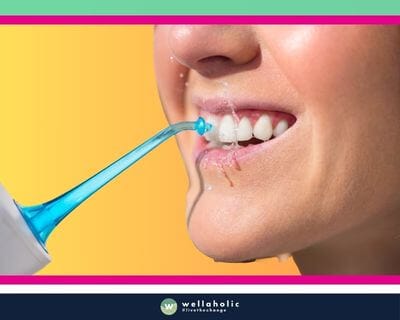
A toothbrush and toothpaste work by mechanically disrupting and removing the soft bacterial film — plaque — that forms on the tooth surface throughout the day. This is a critical function for preventing decay and gum disease, and brushing twice daily does this well. What it does not do is alter the colour of the enamel itself or reach the staining compounds that have bonded within the enamel structure.
Toothpaste marketed as “whitening” typically contains mild abrasive particles or a low concentration of hydrogen peroxide. The abrasive particles can polish away very light, freshly deposited surface stains — but they cannot reach staining that has penetrated the enamel or change the underlying colour of the dentine beneath. The peroxide concentrations in over-the-counter whitening toothpastes are too low and the contact time too brief to produce meaningful intrinsic whitening.
The result is that people with consistent oral hygiene routines are often genuinely puzzled by persistent yellowing. The issue is not their brushing technique or frequency — it is that the cause of their yellow teeth lies beyond what any toothbrush can address.
The Two Types of Tooth Discolouration: Extrinsic and Intrinsic
Extrinsic staining sits on or very close to the outer enamel surface and is caused by pigmented compounds in food, drink, and tobacco bonding to the tooth surface. Common culprits for Singapore residents include kopi, teh tarik, red wine, dark soy sauce, and curry — all deeply pigmented and consumed frequently across the population. These stains accumulate gradually and are the type most responsive to professional cleaning and, to a limited extent, to whitening toothpaste used consistently over time.
Intrinsic discolouration originates within the tooth structure itself and cannot be removed by surface cleaning of any kind. The most common cause is the natural thinning of enamel with age — as the outer enamel layer wears down, the yellower dentine layer underneath becomes more visible through it. Other causes include certain antibiotics taken during tooth development (tetracycline), excessive fluoride exposure during childhood (fluorosis), and genetic variation in enamel thickness and translucency.
Understanding which type of discolouration is present matters because the two require different approaches. Extrinsic staining responds to professional cleaning and reducing staining compound contact time. Intrinsic discolouration requires a whitening agent that can penetrate the enamel — which means professional-grade peroxide concentrations applied in a controlled setting, not a whitening toothpaste.

What Singapore’s Food Culture Does to Tooth Colour
The hawker centre is central to daily life in Singapore, and the food and drinks consumed there are among the most staining in any diet. Kopi — brewed strong and often with condensed milk — deposits tannins and chromogens on the enamel surface with every cup. Teh tarik, dark soy sauce in char kway teow and chicken rice, and the turmeric in curry all contribute to cumulative extrinsic staining that builds up over months and years.
This does not mean Singapore residents should avoid these foods — that framing would be both impractical and culturally tone-deaf. What it does mean is that the staining load from a typical Singapore diet is higher than a diet based primarily on lighter-coloured foods. Rinsing with water after consuming darkly pigmented foods and drinks, and reducing the time these substances remain in contact with the teeth, can help slow the accumulation of extrinsic staining.
Many Singapore customers who visit Wellaholic’s Tanjong Pagar outlet — convenient for CBD professionals during lunch hour — cite kopi and tea habits as the primary reason their teeth have yellowed despite consistent brushing. Wellaholic’s expert team commonly observes that extrinsic staining from dietary sources responds well to professional whitening when combined with some adjustments to consumption habits.

TeethWhite at Wellaholic: How Professional Whitening Works and What It Costs
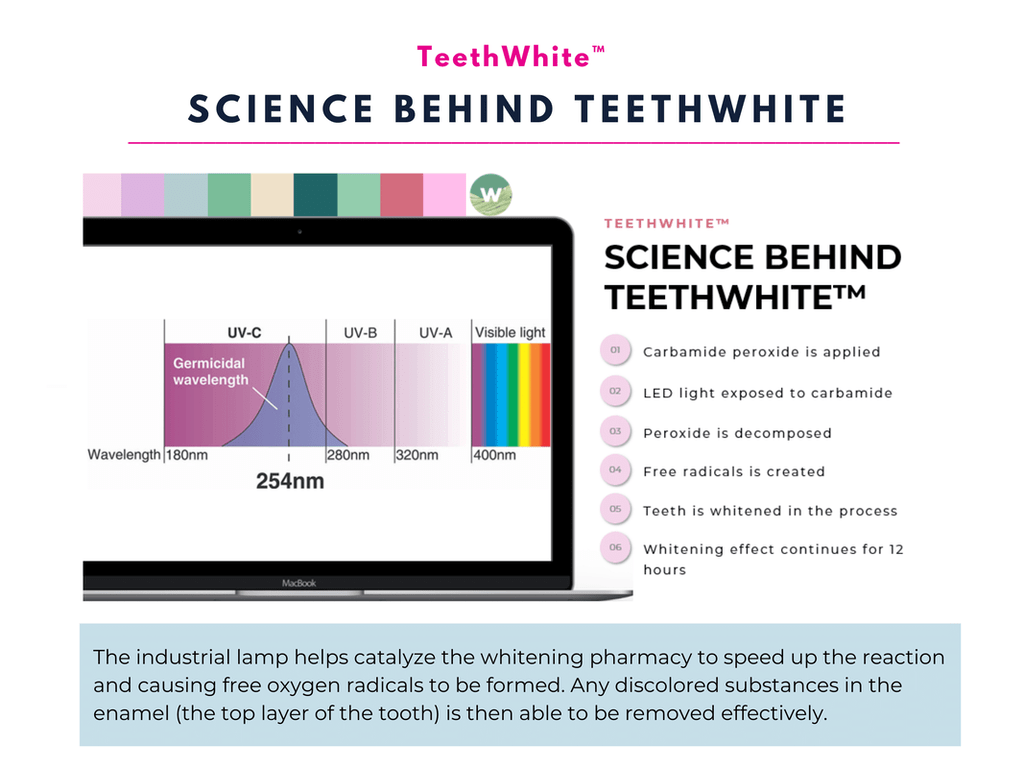
The gap between what brushing achieves and what professional whitening can do comes down to concentration and contact time. Wellaholic’s TeethWhite treatment uses higher-concentration peroxide agents that penetrate the enamel structure and oxidise the stain molecules lodged within — addressing both surface staining and intrinsic discolouration that home care cannot reach. Sessions are conducted at all four Wellaholic outlets by the expert team, with no prior appointment required at most locations.
A single TeethWhite session takes approximately 20–30 minutes and involves no drilling, injections, or recovery period. The peroxide agent is applied to the teeth in a controlled setting, allowed to work for the session duration, then removed — the process is straightforward and does not require time off after the appointment. Many Singapore customers find that a course of sessions produces a progressively brighter result as the whitening compounds work cumulatively on deeper staining layers.
All prices below are GST-inclusive.
Per-Session Pricing
| Sessions | Price |
| 1 Session | $149 |
| 3 Sessions | $142 per session |
| 6 Sessions | $134 per session |
| 12 Sessions | $119 per session |
TeethWhite Unlimited Monthly Plan
| Plan | Monthly Rate |
| 1-Month | $349 |
| 3-Month | $332 |
| 6-Month | $314 |
| ☀️ AA (6-Month) | $251 |
| 12-Month | $279 |
| ☀️ AA (12-Month) | $223 |
☀️ Afternoon Advantage: 20% off 6-month and 12-month unlimited plans, Mon–Fri 11am–5pm, excluding public holidays.
Lifetime Maintain Mode (LMM): Customers who complete 12 sessions qualify for long-term maintenance pricing at $99 per session.
To find out which option suits your staining profile and schedule, Wellaholic’s expert team is available for a no-obligation consultation at any outlet.
Customer Testimonial for TeethWhite Teeth Whitening
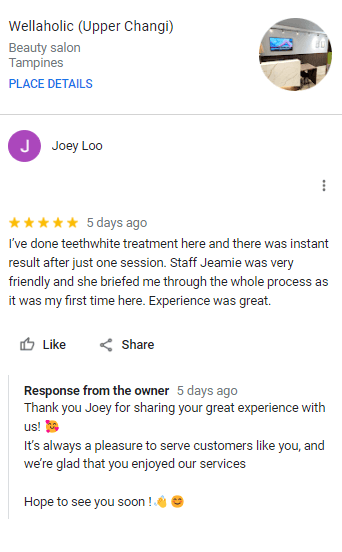
Joey visited Wellaholic looking to address stained teeth and walked away from his very first session with results he could see immediately. The treatment experience was smooth from start to finish, with the team taking time to walk him through the entire TeethWhite process before beginning — particularly valuable as it was his first visit to Wellaholic. That thorough briefing approach helped Joey feel informed and comfortable rather than uncertain about what to expect. He described the overall experience as great, and his visit reflects what many Singapore customers find when they try professional teeth whitening for the first time — a straightforward, well-managed session that delivers visible improvement without complexity or discomfort.
Read Actual Review by Customer
“I’ve done TeethWhite treatment here and there was instant result after just one session. Staff Jeamie was very friendly and she briefed me through the whole process as it was my first time here. Experience was great.” (Source: Google Review)

Conclusion
Yellow teeth despite twice-daily brushing is one of the most common and understandable frustrations in personal care — and one of the most straightforward to explain once the distinction between extrinsic and intrinsic discolouration is understood. Brushing remains essential for oral health, but it was never designed to whiten from within. For surface staining accumulated from kopi, teh tarik, and Singapore’s richly pigmented food culture, professional whitening addresses what toothpaste cannot.
Wellaholic’s TeethWhite service is available across all four outlets islandwide. Whether you prefer the convenience of the Somerset outlet near Orchard, the Tanjong Pagar hub in the heart of the CBD, the Kovan heartland location open until 10pm, or the Upper Changi outlet accessible directly from the MRT station — a session can be arranged around your schedule. Wellaholic’s expert team is ready to assess your staining profile and recommend the right approach, without pressure to commit at the first visit.
Key Takeaways
- Brushing removes plaque, not stains: Toothpaste and toothbrush bristles address surface bacteria and debris but cannot alter the colour of enamel or reach staining compounds bonded within the tooth structure.
- Two distinct causes require two different solutions: Extrinsic staining from food and drink sits on the enamel surface; intrinsic discolouration originates within the tooth — each responds to different interventions.
- Singapore’s food culture contributes meaningfully to extrinsic staining: Kopi, teh tarik, dark soy sauce, and curry are among the most pigment-dense items in a typical Singapore diet and accumulate staining on the enamel surface over time.
- Whitening toothpastes have limited effect: OTC whitening products contain peroxide concentrations too low for intrinsic whitening and abrasives that address only very mild, freshly deposited surface staining.
- Professional whitening penetrates enamel: Higher-concentration peroxide agents used in professional settings oxidise stain molecules within the enamel structure — addressing what brushing and home whitening products cannot.
Frequently Asked Questions (FAQ)
Q1: Can whitening toothpaste actually whiten teeth?
Whitening toothpastes contain mild abrasives or low concentrations of hydrogen peroxide designed to address very light surface staining. They are moderately effective at preventing new staining from building up and may slightly brighten freshly stained teeth with consistent long-term use. They cannot change the intrinsic colour of the enamel or remove staining that has bonded deeply to the tooth surface.
🔵 Abrasive mechanism: Polishes away very mild, loosely attached surface deposits with daily use.
🔵 Peroxide concentration: OTC products contain peroxide levels too low for meaningful intrinsic whitening.
🔵 Contact time limitation: Brief brush-and-rinse contact time prevents peroxide from penetrating the enamel.
🔵 Maintenance role: Most useful for slowing new stain accumulation between professional whitening sessions.
🔵 Enamel abrasion risk: Overuse of highly abrasive whitening toothpastes can gradually wear enamel over time.
🔵 Not a substitute: Whitening toothpaste does not replicate what professional-grade peroxide concentrations achieve.
Q2: Why do teeth yellow with age even with good oral hygiene?
As a person ages, the outer enamel layer naturally wears thinner through years of chewing, acidic food and drink, and normal abrasion. The dentine layer beneath the enamel is naturally yellower in colour, and as the enamel thins, more of this underlying dentine colour becomes visible through it. This is an intrinsic change in the tooth structure and cannot be reversed by brushing or addressed by whitening toothpaste alone.
🔵 Enamel thinning: Gradual wear of the outer enamel layer is a normal ageing process that begins in early adulthood.
🔵 Dentine visibility: The yellower dentine beneath the enamel becomes progressively more visible as enamel thins.
🔵 Intrinsic classification: Age-related yellowing is intrinsic — originating within the tooth structure, not on the surface.
🔵 Brushing limitation: No toothbrush or toothpaste can reverse enamel thinning or change the colour of dentine.
🔵 Professional whitening response: Peroxide-based professional whitening can lighten the visible dentine colour through the enamel.
🔵 Prevention: Reducing acidic food and drink consumption and using a soft-bristled brush slows the rate of enamel wear.
Q3: Is teeth yellowing from kopi and teh tarik reversible?
Staining from kopi, teh tarik, and other pigmented food and drink sources is extrinsic — it sits on and within the surface layers of the enamel and can be addressed through professional cleaning and whitening. The tannins and chromogens in these beverages bond to the enamel surface over time, building up into visible staining that whitening toothpaste alone cannot fully remove. Professional whitening using higher-concentration peroxide agents is the most effective approach for this type of accumulated dietary staining.
🔵 Chromogen bonding: Pigmented compounds in kopi and tea attach to enamel proteins and accumulate over time.
🔵 Tannin staining: Tannins in tea and coffee are particularly adhesive to enamel surfaces.
🔵 Soy sauce and curry: Dark soy and turmeric-based sauces contribute to the staining load from Singapore’s hawker food culture.
🔵 Rinsing strategy: Rinsing with water immediately after consuming staining foods and drinks reduces contact time.
🔵 Professional cleaning: Removes accumulated surface staining that has built up beyond what brushing addresses.
🔵 Whitening response: Extrinsic dietary staining is among the most responsive to professional peroxide-based whitening.
Q4: How does professional teeth whitening work differently from toothpaste?
Professional teeth whitening uses hydrogen peroxide or carbamide peroxide at concentrations significantly higher than those found in over-the-counter products, applied in a controlled setting for a sustained period. The peroxide penetrates the enamel and reaches the stain molecules lodged within, oxidising them and breaking down the compounds that give staining its colour. This process addresses both surface staining and the intrinsic discolouration that brushing and whitening toothpaste cannot reach.
🔵 Peroxide concentration: Professional-grade peroxide concentrations are substantially higher than OTC whitening products.
🔵 Enamel penetration: The peroxide agent enters the enamel structure rather than acting only on the surface.
🔵 Oxidation mechanism: Stain molecules are chemically broken down through an oxidation process, not physically removed.
🔵 Contact time: Sessions allow sustained peroxide contact time for the oxidation process to work effectively.
🔵 Intrinsic reach: Professional whitening can address dentine-level discolouration that home products cannot access.
🔵 Controlled application: Professional setting ensures peroxide is applied evenly and protective measures are in place for gum tissue.
Q5: How many TeethWhite sessions will I need?
The number of sessions varies depending on the type and depth of staining, individual enamel characteristics, and the shade improvement a customer is seeking. Many Singapore customers find that a course of sessions produces progressively improving results as the whitening compounds work cumulatively on deeper staining layers. Wellaholic’s expert team assesses each customer’s staining profile at the first visit and can advise on a suitable starting approach without requiring a commitment to a full programme upfront.
🔵 Staining depth: Deeply set intrinsic discolouration typically requires more sessions than recent extrinsic staining.
🔵 Individual variation: Enamel thickness, porosity, and baseline colour all influence how quickly results develop.
🔵 No fixed guarantee: A specific number of sessions or shade improvement cannot be promised — outcomes vary between individuals.
🔵 Cumulative results: Each session builds on the previous, with improvements typically becoming more visible over a course.
🔵 Per-session flexibility: The per-session pricing option allows customers to assess results before committing to a longer plan.
🔵 LMM option: Customers who complete 12 sessions qualify for Lifetime Maintain Mode at $99 per session for long-term maintenance.
Q6: Is professional teeth whitening safe for sensitive teeth?
Sensitivity during or after professional whitening is a commonly reported experience and is usually temporary — it typically subsides within a day or two after the session. The peroxide used in professional whitening temporarily opens the enamel tubules, which can increase sensitivity to temperature changes during and immediately after treatment. Wellaholic’s expert team assesses suitability at the first consultation and can adjust the approach for customers with pre-existing sensitivity concerns.
🔵 Temporary sensitivity: Most customers who experience sensitivity find it subsides within one to two days after the session.
🔵 Enamel tubule mechanism: Peroxide temporarily increases enamel permeability, which is the physiological basis of post-whitening sensitivity.
🔵 Pre-existing sensitivity: Customers with significant pre-existing sensitivity should disclose this before the first session.
🔵 Not permanent damage: Temporary post-whitening sensitivity does not indicate enamel damage in most cases.
🔵 Aftercare: Avoiding very hot or cold foods and drinks for 24 hours after a session reduces sensitivity discomfort.
🔵 Expert assessment: Wellaholic’s expert team discusses suitability and manages expectations at the consultation stage.

About Wellaholic’s Expert Team
Wellaholic’s treatments are designed and overseen by our founding team, whose qualifications include a CIDESCO Diploma in Aesthetics and a Level 3 Certification in Beauty Therapy & Salon Management from Brentwood College UK. With hands-on experience across IPL, SHR hair removal, and a wide range of aesthetic treatments, our founders bring both academic grounding and practical expertise to every service protocol at Wellaholic.
Our Aesthetic Director holds a CIDESCO certificate in skin care and a Bachelor of Health Science (Aesthetics) from Torrens University of Australia, with over a decade of industry experience spanning Singapore and Australia. Her background includes a senior role at a leading laser aesthetics group, giving her deep insight into safe and effective treatment delivery across diverse skin types.
Together, Wellaholic’s expert team has served over 18,000 customers across four outlets in Singapore — Somerset, Tanjong Pagar, Kovan, and Upper Changi — and has been recognised at the Beauty Insider and Daily Vanity Awards.
Contact us at support.
GET IN TOUCH
Book Now Pay Later
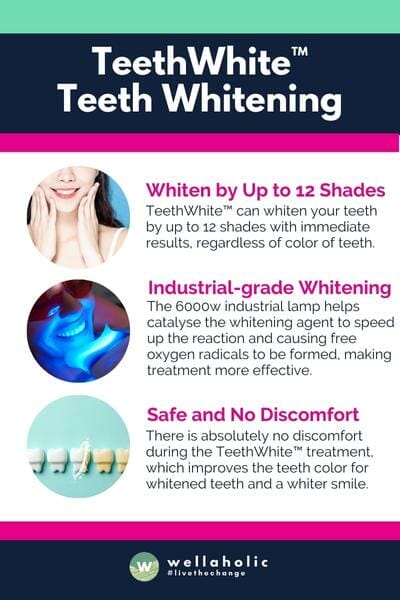
TeethWhite™ Teeth Whitening – Get Up to 12 Shades Whiter
- ⭐ Immediate Results. TeethWhite™ brightens your smile up to 12 shades in a single session, offering an instant boost to your confidence.
- ⭐ Industrial-Grade Whitening. TeethWhite™ teeth whitening employs industrial-grade lamps for optimal whitening results.
- ⭐ Effective Ingredients: Our teeth whitening gel features Carbamide Peroxide, a proven and potent whitening agent.
- ⭐ Advanced technology: TeethWhite™ uses strong LED light technology to activate the whitening gel and ensure thorough and consistent results.
- ⭐ Award-Winning. Wellaholic’s treatments have been recognized by top beauty publications such as Daily Vanity, Beauty Insider, and Tropika Club Magazine.
- ⭐ Over 2000 Verified Customer Reviews. Wellaholic has over 30 industry awards and over 2000 positive reviews from customers, and >50% are repeat customers.